Building Ohio’s Healthcare Workforce Together
Connecting people to careers and employers to talent
The journey toward a unified state strategy began with independent leaders already deeply rooted in healthcare workforce solutions.
The Health Collaborative had been serving as a critical convener of more than 70 intermediaries, healthcare leaders, and educators. Simultaneously, the OHIO Alliance for Population Health, facilitated and led by Ohio University, was managing a statewide collaborative of more than 50 affiliated universities and hospital systems to solve complex health concerns. Given their shared commitment to healthcare, the alignment between the two organizations was natural from the beginning. Recognizing that a fragmented approach was insufficient to sustain Ohio’s $171.5 billion healthcare economy, which supports 1.19 million jobs, Health Workforce Ohio was launched to serve as a definitive statewide hub for workforce innovation.
A critical 18-month phase of legislative vetting and advocacy began mid-2024.
Rural Health Transformation Request for Proposals
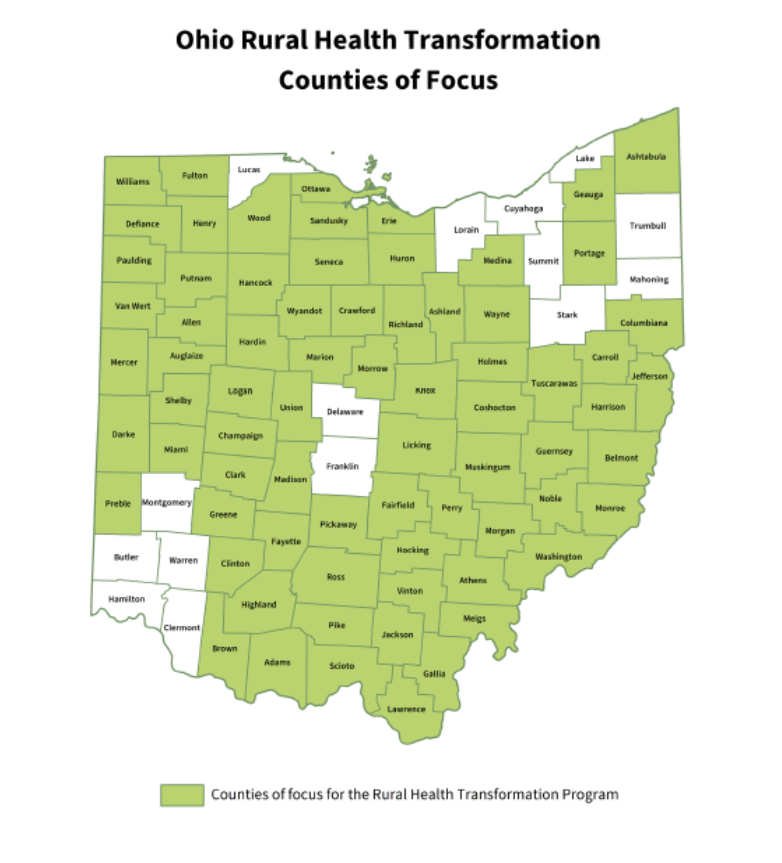
This foundation of collaboration culminated in early 2026 with the release of the state’s Rural Health Transformation Request for Proposals (RFP), a highly competitive process offering only one single award for statewide workforce coordination. Ohio University served as the lead applicant, bringing its status as the state’s top producer of primary care physicians and allied health professionals, with its medical school producing more graduates practicing in rural areas than any other in Ohio. The Health Collaborative served as a critical technical partner, providing vital expertise in healthcare workforce development.
In May 2026, the State of Ohio recognized this partnership by officially awarding it the $10 million contract. Today, Health Workforce Ohio is backed by a growing coalition of more than 85 partner organizations across Ohio’s healthcare, education, and workforce sectors, with the Ohio Association of Community Health Centers as chair of its steering committee alongside 10 other statewide organization members. Our comprehensive strategy focuses on five key priority areas: workforce pipeline coordination, community health worker upskilling, pharmacy upskilling, recruitment and retention, and continuing medical education.
Convening Partners